
How Do I Give Myself Permission to Have Fun? The Fool Has the Answer
Mar 31, 2026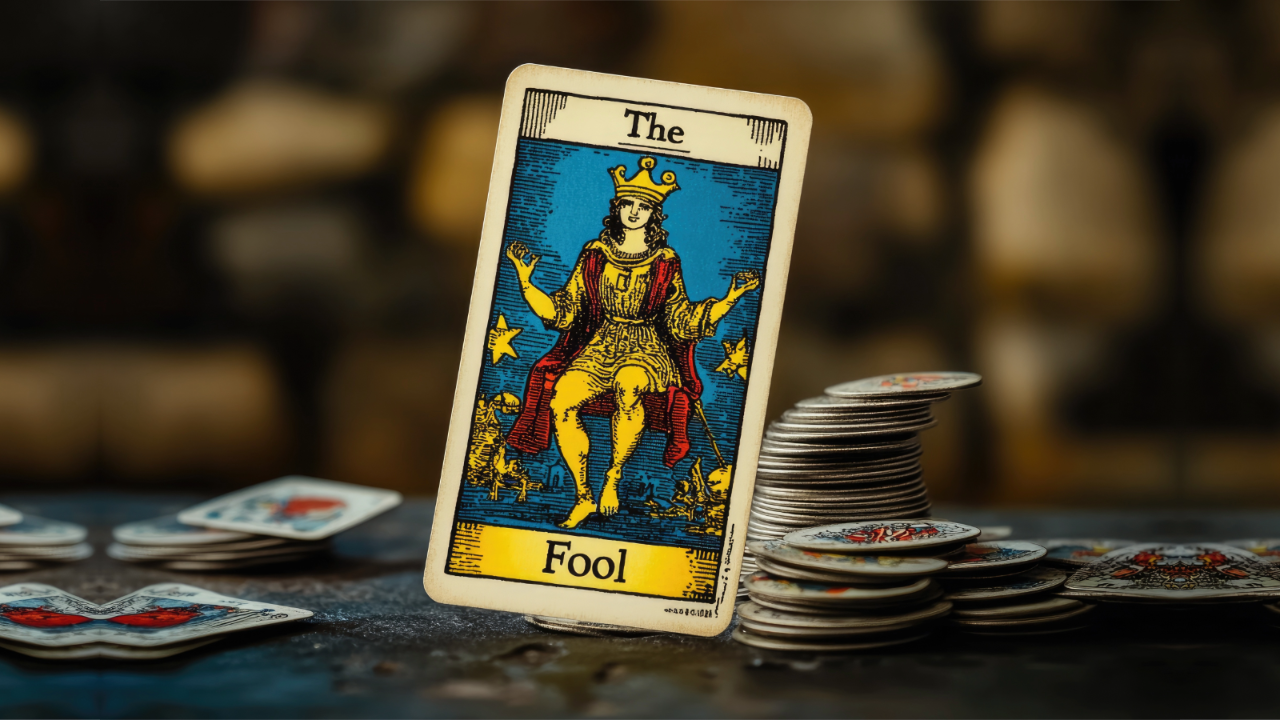
In this post:
- Why fun is not frivolous and what science is beginning to show about joy, sound, and the mycelial network beneath our feet
- What the Fool card in Tarot and Oracle traditions actually means, and why the court jester was the wisest person in the room
- Why carnival and Fasching existed and what that tells us about the human need for release
- Practical ways to give yourself permission to have fun, even when life feels heavy
- How to bring others into the fun, and why entertaining yourself is the secret starting point
- A Greenlandic shamanic teaching on laughter and the birds
Life is heavy right now. There is no shortage of things to grieve, to fight for, to worry about. If you are feeling disconnected from yourself and the world, or running on empty with no idea where the joy went, perhaps that is exactly why this conversation is the one worth having.
We are at the end of March, stepping into April, and one of the things we keep asking ourselves, is this: how do you allow yourself to have more fun? How do you give yourself permission to be a fool?
Not a fool in the diminished sense. A fool in the ancient, knowing sense.
At Magic is Key, an online school of effective spiritual practices, we believe that joy and fun are not separate from the spiritual path. It may be one of the most direct routes onto it.
The Fool Who Knew the Truth
In Tarot and Oracle traditions, the Fool is one of the most powerful cards in the deck. It is the willingness to step off a cliff into the unknown. The willingness to flounder, to fail, to look like an idiot in front of the whole king's court. And here is the thing: the court jester, the fool at the table of royalty and nobility, was often the only person in the room allowed to tell the truth. They got closer to what was real than anyone else there.
To allow yourself to be a fool is to allow yourself to be free.
A Story About Finger Paints
Pipaluk studied graphic design briefly at a prestigious academy, in rooms with famously gray walls. In one class, students were paired up and asked to give each other three creative limitations to work within. Here are two of the three limitations she gave to her partner: use finger paints, and have fun in the process.
For her, this was simple. Spread the paper, let the fingers explore, follow wherever the fun takes you.
But when her partner shared her response, she said she hated finger paints and that being told to have fun made it impossible to have fun. The teacher agreed. The whole class agreed. For the majority of that room, fun was something that evaporated the moment it became an assignment.
Pipaluk left that program before graduating.
Why Fun Is A Way of Tending to our Living Planet
Having fun is an inherently human quality. We see it across the mammalian world: play, joy, movement with no immediately visible purpose or productivity. And yet it has always been treated as lesser, as something we need to earn, schedule, and justify.
There is a science as to why this needs to change: researchers studying sound, vibration, and the natural world are finding that the things we call frivolous may be feeding the earth in ways we are only beginning to understand. Low-frequency sound, the kind that thumps through the ground at a celebration, has been found in studies to stimulate the growth of mycelial networks, the underground fungal web that connects and feeds entire forest ecosystems. In other words, when people gather and dance and make music together, the earth beneath them may be responding. Growing. Feeding the roots.
This is still early science. But it rhymes with what the old traditions always knew: Fun is not separate from purpose. It may be one of the deepest forms of it.
This is also at the heart of embodied spiritual practice. Joy is not something you think your way into. It is something your nervous system either knows how to access or has forgotten. Part of the work of somatic spiritual practices is remembering.
Why Carnival Existed
Fasching, Carnival, Mardi Gras. These festivals existed across Europe for centuries during some of the hardest periods of human history. Under the rule of kings and queens, with little social mobility and lives that were genuinely brutal, the laws would soften for that one week. Things that were otherwise forbidden, such as gambling, dressing in ways outside your station, and public wildness, were permitted. It was a necessary outlet and a human necessity.
Society knew, even then, that people could not sustain order without release. That fun was not a luxury. It was what helped life go on.
If you are feeling spiritually exhausted or overwhelmed, a night or a week of genuine, silly, purposeless fun might be exactly what your nervous system is asking for.
How to Let Yourself Have More Fun
Start with this: visualize yourself doing something you find wildly fun but have been too self-conscious to try. Imagine some of the worst that could happen, and let it be harmless.
Here is a personal from Pipaluk: walking down the street while listening to music and starting to dance a little. She started with a head bob. Then an arm. Then a full body moment at a stoplight.
The fear is always the same: people are watching. But here is the flip: when you see someone genuinely dancing on the street, does it annoy you? Or does it give you something? Do you take a little bit of that joy into your day without even realizing it?
When you become a fool from a place of genuine joy, you are not embarrassing yourself. You are offering something important to the world.
If you have been on a stage before, you know there is something that comes alive when there is an audience. The performance is a gift to the audience and the world is always an audience. The question is whether you are willing to make the gift.
Start small. A head bob. A hum. Singing loudly in the car, where people might hear you at the stoplight and feel something lift in their chest.
More ways to find fun: Reading a romance novel written for teenagers. Watching videos of pets doing ridiculous things. Playing dress up. Whatever it is, go toward the deliberately silly. Intentional frivolity is a practice.
How to Bring Others Along
You cannot force anyone to have fun. If someone is not in the mood, let them be.
But there are ways to create the conditions.
Smile at someone who looks cranky on the street. Not a polite smile. A real one, the pure joy of life kind. It does not always work. But often enough, something in them cannot help but respond with a smile, however small.
You can also memorize a joke you find genuinely hilarious. Laughter is contagious, but only if you actually find it funny first. Our uncle, who speaks Danish and tells stories that nobody at the table can follow, gets so caught up in his own telling that he cannot stop laughing. His English is limited. But even those of us who speak Danish often don't quite know what he is saying. Still, the whole table ends up in tears from laughing so hard with muscles sore the next morning.
The secret is not the joke. The secret is that he entertains himself so thoroughly that everyone around him gets pulled in. If you want to bring more fun to others, the beginning of the path is learning how to genuinely crack yourself up.
A Shamanic Teaching on Laughter and the Birds
There is a teaching that Pipaluk received from Rakel, a Greenlandic shaman. She shared that in the beginning of things, when all was coming into being, the word for the great web of life in Greenlandic is Sila. Sila is much more than that, but for the sake of this telling I will leave it as this highly simplified version.
It was when Sila laughed, that all the birds were born.
When you see birds in flight, that swirl and turn and sudden collective lift, does it not look like laughter?
The April Fool's Challenge
We have one for you. April Fool's Day is right around the corner. Pull a harmless, kind, funny little prank on someone you love. Nothing that hurts. Something that makes both of you laugh.
Frequently Asked Questions
How do I use somatic practices in my spiritual work? Somatic spiritual practices work by bringing awareness into the body itself, not just the mind. Something as simple as dancing in the street, laughing until your muscles ache, or playing without purpose is a somatic practice. Your nervous system learns through felt experience, not through thinking alone. Joy, when actually felt in the body, is one of the most powerful tools of transformation available to us.
How do I reconnect with myself spiritually? Often the first step is the simplest and the most overlooked: give yourself permission to do something that has no purpose other than pleasure. Fun is a doorway. Playfulness is a doorway. The part of you that knows who you are tends to show up when you stop performing seriousness for a moment.
How do I use rituals to feel more grounded? Ritual does not have to be elaborate. Carnival, as we explore in this post, was a ritual of release that entire societies depended on. A weekly practice of deliberately silly, joyful, purposeless activity can function as its own kind of ritual reset for your nervous system.
Ready to Go Deeper?
If something in this landed for you, and you are ready to explore what it actually means to reconnect with the most alive, free, and authentic version of yourself, Magic is Key is a trauma-informed online school of effective spiritual practices that combines shamanic witchcraft, somatic healing, and sacred seasonal wisdom. We would love to meet you.
It all starts with a free 15-minute Compass Call with Pipaluk, Firebrand Priestess and trauma-informed spiritual teacher. This is not a sales call. It is a space to be witnessed, to check in, and to discover together whether the path forward is one we walk alongside each other.
👉 Book your free Compass Call — Free · 15 minutes · No pressure
With love, Pipaluk and Serafina
A note on the science: Early studies suggest that low-frequency sound and vibration can stimulate mycelial growth, while high frequencies can inhibit it. The connection between human celebration and mycelial activity is an emerging and poetic area of research, not yet a settled conclusion. We share it in the spirit it was given: as a beautiful and expanding question.
Sign up to the MagicLetter for tips, inspiration and special offers.
We hate SPAM. We will never sell your information, for any reason.
